
When AI Actually Understands Emotion
Better tooling for an old marketing challenge

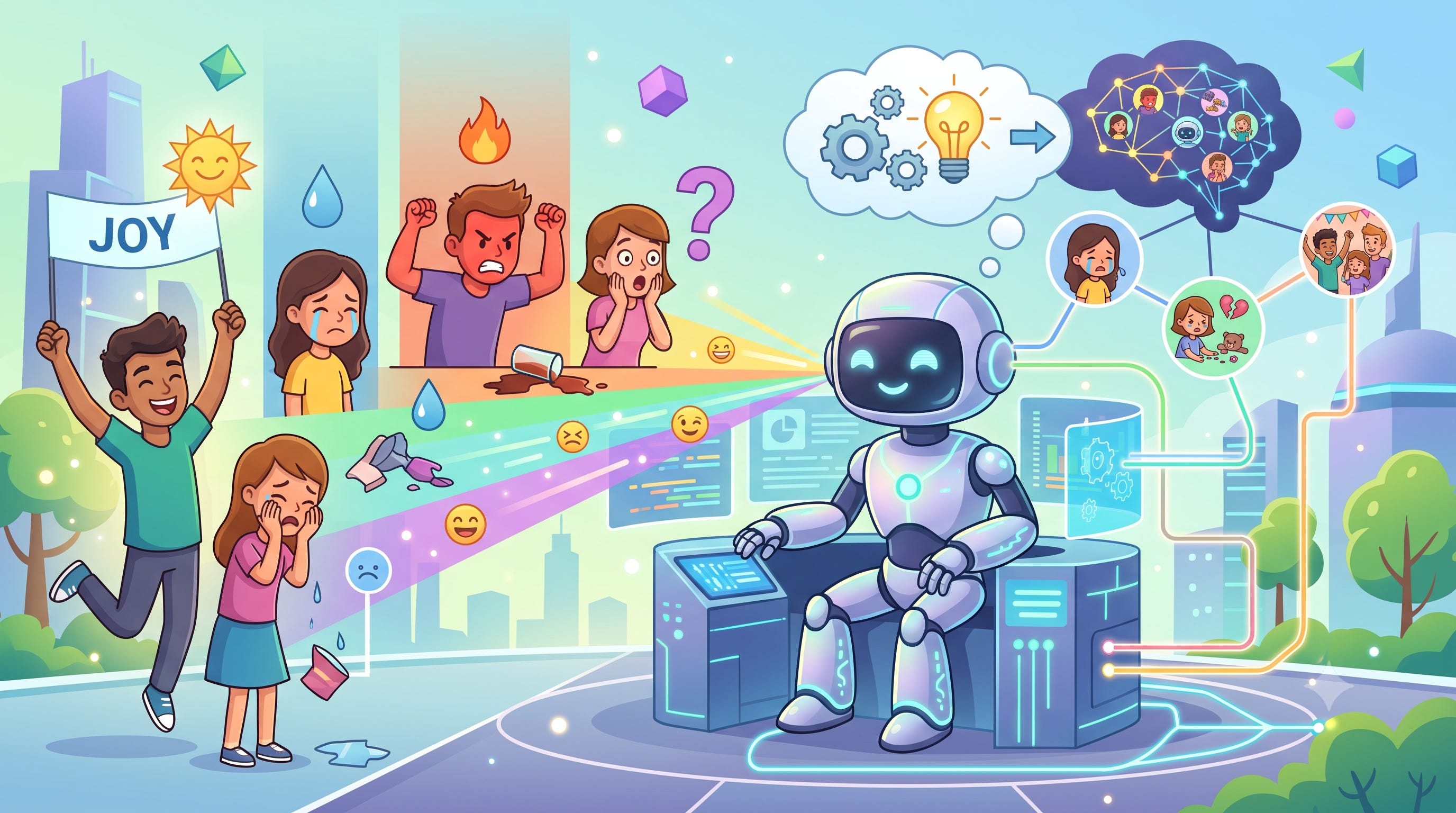
A recent IEEE Spectrum feature opens with a scenario that should sound familiar to anyone who has ever sat through a performance review they weren’t ready for: you say you’re fine, you even smile, but your voice catches slightly and your shoulders drop. A basic emotion AI system, trained to slot reactions into categories like “happy” or “sad,” logs the smile and the words and moves on, but it misses the part that actually mattered.
The article, written by Neurologyca’s Marc Fernandez, makes the case that emotion AI is finally catching up to that gap, by learning to read context rather than just expressions. For marketers, that shift is worth understanding, because this industry didn’t arrive at emotion AI as a bystander. We built a chunk of the field, decades before anyone called it that.
Marketing Got Here First, It Just Didn’t Have the Tools
Fernandez’s own company started in neuromarketing back in 2015, using webcams, eye tracking, and EEG to measure how people actually reacted to ads, logos, and products, rather than relying on the self-reported “rate this commercial 1 to 10” surveys that have always been a poor substitute for what someone genuinely felt. One example from the piece is hard to forget: testing showed the most effective horror-film trailers land a very specific blend of fear, anxiety, and joy, not just maximum fear. That’s a marketing insight, generated by exactly the kind of biometric, multi-signal AI that’s now showing up everywhere from call centers to companion robots. Marketing wasn’t waiting for emotion AI to arrive. It was one of the industries that funded its early development.
What’s changed is the sophistication of the read. Most emotion AI systems still operating today detect one signal and assign one label, which is roughly as useful as judging an entire customer relationship from a single facial expression in a single frame. Real emotional response doesn’t work that way: a laugh can mean delight or nervousness, a raised voice can mean enthusiasm or anger, and the same physiological spike means different things to different people depending on culture, history, and what’s happening around them. A 2024 study out of South Korea, cited in the piece, found that fusing physiological, environmental, and personal data into one model cut emotion-recognition errors by 32% compared to single-signal systems. The new generation of “human-context AI” is built specifically to combine situational context, personal history, and real-time behavioral signals into one read, rather than guessing from a smile alone.
Where This Is Already Running
This isn’t a research curiosity sitting three years out. Call center platforms from NiCE and Genesys already flag when a customer sounds frustrated and prompt agents in real time to slow down or shift tone, which is a live, operational version of exactly the technology the article describes. Voice AI systems from Meta and startups like Hume AI are being built specifically to detect emotional cues and adjust how they respond. The AI companionship category, where tone and emotional read are the entire product, is projected to be worth roughly $555 billion by 2035. If your customer experience stack includes a chatbot, a voice assistant, or a call center tool with any kind of sentiment scoring, some version of emotion AI is already running inside your marketing function today, whether or not anyone labeled it that way in the vendor pitch.
The practical upside is real. Better context means fewer false reads: a system that knows a pause in a coaching call usually signals thoughtfulness, while the same pause in a different setting signals discomfort, can give a brand a genuinely more accurate picture of how a customer experience is landing than a single-signal sentiment score ever could. That’s useful for ad testing, useful for customer service, and useful for figuring out which parts of a campaign actually connect rather than which parts merely got watched.
Neurologyca’s own context-fusion layer is already integrated into driver-safety platforms like Netradyne, home assistants like Amazon Alexa, and healthcare AI tools like Sully.ai, according to the company. None of those are marketing products specifically, but they show the same underlying capability that’s increasingly showing up in customer-facing brand tools: software that watches engagement and confidence shift in real time and adjusts its response accordingly, rather than waiting for a survey at the end.
The Part of the Article Important for CMOs
Fernandez, who has every commercial incentive to oversell what his own company’s technology can do, spends a notable amount of the piece doing the opposite. He’s explicit that emotion AI cannot reliably detect deception, and that claiming otherwise overstates the technology. He notes that even a quarter of people surveyed felt the literal opposite of what their own smartwatch reported about their stress levels, evidence that single-signal capture fails constantly even with willing, cooperative users wearing the device on purpose. He states plainly that hiring and firing decisions shouldn’t be based on emotion AI output alone, and that the technology is designed to surface signals a human might miss, not to replace human judgment about what those signals mean.
That caution should transfer directly into how marketing organizations deploy this technology, and right now most don’t have a policy for it at all. If your team is using emotion-aware tools to score creative testing, qualify leads based on detected “genuine interest,” or personalize messaging based on a real-time emotional read, the same limits apply. A model that’s uncertain about an ambiguous signal should say so, not force a confident label your team then treats as fact in a creative brief. The same overclaiming risk that applies to deception detection applies just as directly to claiming you can detect authentic enthusiasm, genuine trust, or real intent to purchase from a face on a webcam.
The Privacy Question Gets Sharper, Not Softer
Context-aware emotion AI is, by design, reading more of a person than its predecessors: posture, voice modulation, micro-expressions, personal history, behavioral change over time. The EU AI Act already restricts emotion recognition in workplaces and schools specifically because of how invasive that combination becomes once it’s accurate enough to trust. Marketing hasn’t been named in that restriction yet, but the direction of travel is obvious, and the smartwatch stress example is a useful reminder of why: a system confident enough to influence a real decision needs to be confident for the right reasons, not just confident-sounding.
For any brand using webcam-based ad testing, in-store sentiment cameras, or emotionally responsive personalization, the standing question from earlier in this series is the same one that applies here: is the emotional data collection clearly disclosed and opted into, or is it quietly bundled into a tool’s default behavior the way so much AI functionality currently is? The more accurate these systems get, the more that consent question matters, not less, because the data being captured is more personal than a click or a page view ever was.
What This Actually Changes
The honest takeaway isn’t that emotion AI is suddenly trustworthy enough to hand creative or targeting decisions over to. It’s that the read is getting good enough to be genuinely useful as an input, provided someone keeps treating it as an input rather than a verdict. Marketing has spent decades trying to read the room with focus groups, surveys, and gut instinct from creative directors who’d seen a hundred campaigns land or fail. Context-aware emotion AI is a sharper instrument for the same old job, not a replacement for the judgment that decides what to do with what it sees.
Ethicore Advisors Author’s Note
I’ve spent enough time around neuromarketing and biometric ad testing to know how seductive a confident-sounding emotion score is in a creative review. Someone puts a number on the screen, the room nods, and the number quietly becomes a fact nobody examines more closely. Context-aware emotion AI will make those numbers more accurate, which is good news, and more persuasive, which is the part that worries me.
The gap I keep seeing in client conversations isn’t whether to use this technology. Most of you already are, somewhere in your call center stack or ad testing vendor. The gap (as always) is governance: who decides how confident a read needs to be before it changes a campaign or a customer interaction, and who’s checking that the consent behind it is real rather than buried in a terms-of-service update from eighteen months ago.
If your team is rolling out anything emotionally responsive and hasn’t asked who’s accountable for how confidently it gets trusted, that’s worth a conversation. You can find more on how I work with marketing leaders on exactly this at Ethicore Advisors.